
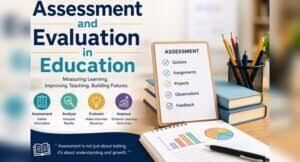
15 Ways to Use Assessment and Evaluation in Education
Assessment and evaluation play a central role in effective teaching. They help teachers understand what students know, identify learning gaps, adjust instruction, and measure progress toward learning goals.
However, assessment should involve more than giving tests and assigning grades. When teachers use different assessment methods at the right time, they gain a clearer picture of student learning and can make better instructional decisions.
This guide explains 15 ways teachers can use assessment and evaluation in education, with practical examples that teachers can apply in everyday classrooms.
What Is Assessment in Education?
Assessment refers to the process of collecting information about student learning.
Teachers use assessment to find out:
- What students already know
- What students understand
- Which skills they can demonstrate
- Where students struggle
- How much progress they have made
- What they need to learn next
Assessment can happen before, during, or after instruction.
For example, a teacher might ask students three questions at the beginning of a lesson to check prior knowledge. During the lesson, the teacher may observe group work and ask questions. At the end, students may complete a short quiz or reflection.
Each activity gives the teacher useful information.
What Is Evaluation in Education?
Evaluation involves making a judgment about student learning, performance, or the effectiveness of an educational program based on collected evidence.
For example, a teacher may evaluate whether a student has met the learning objectives for a unit. A school may evaluate whether a reading intervention improves student outcomes.
Assessment collects evidence.
Evaluation uses that evidence to make informed judgments and decisions.
The two concepts work together, although they serve different purposes.
| Assessment | Evaluation |
|---|---|
| Collects information about learning | Interprets evidence to make judgments |
| Helps identify strengths and gaps | Determines whether goals or standards have been met |
| Often supports ongoing instruction | Often supports decisions about achievement or program effectiveness |
| Can occur throughout learning | Often occurs after reviewing evidence |
| Example: quiz, observation, project | Example: determining whether a student meets a learning standard |
Why Assessment and Evaluation Matter
Effective assessment helps teachers make better decisions.
Without assessment, teachers may assume students understand a concept simply because they completed an assignment.
A student may receive a high score on a worksheet but still struggle to apply the concept in a new situation.
Assessment gives teachers evidence.
For example, suppose a teacher teaches fractions. Students complete a worksheet, and most answers look correct. The teacher then gives students a real-world problem that requires them to compare fractions.
Some students struggle.
The teacher now has valuable information. Students may know the procedure but need more practice applying the concept.
The teacher can adjust instruction accordingly.
15 Ways to Use Assessment and Evaluation
Below are 15 ways for assessment and evaluation in education for desired outcomes in teaching and learning process.
1. Assess Students Before Teaching
Teachers can use diagnostic assessment before starting a new topic.
The goal is to understand what students already know.
Examples include:
- Short pretests
- KWL charts
- Brainstorming
- Concept maps
- Classroom discussions
- Quick polls
- Entry tickets
- One question surveys
For example:
Before teaching ecosystems, a teacher asks:
“What do you think would happen if all insects disappeared from a forest?”
Students write their responses.
The teacher reviews the answers and discovers that many students do not understand food chains.
The teacher can then address that misconception early in the unit.
Diagnostic assessment helps teachers avoid spending too much time on concepts students already understand while giving additional attention to areas that need support.
2. Use Formative Assessment During Learning
Formative assessment happens while students learn.
It helps teachers identify misunderstandings before they become larger learning gaps.
Teachers can use:
- Questioning
- Exit tickets
- Quick quizzes
- Think-pair-share
- Classroom polls
- Observation
- Student discussions
- One minute papers
- Whiteboard responses
Formative assessment does not always require grades.
Its main purpose is to improve teaching and learning.
For example:
A mathematics teacher asks students to solve:
3/4 + 2/3 = ?
Instead of collecting answers immediately, the teacher asks students to explain how they arrived at their answers.
The teacher notices that several students incorrectly add the denominators.
This information allows the teacher to address the misconception immediately.
3. Use Summative Assessment to Measure Learning
Summative assessment evaluates student learning at the end of a unit, course, or instructional period.
Examples include:
- Final exams
- Unit tests
- Research projects
- Final presentations
- End-of-term assessments
- Major performance tasks
Summative assessments help teachers determine whether students achieved the intended learning outcomes.
However, teachers should avoid relying on a single test whenever possible.
A combination of evidence can provide a more complete picture of student achievement.
4. Use Authentic Assessment
Authentic assessment asks students to apply knowledge and skills to realistic tasks.
Instead of simply answering questions about writing, students might write a letter to a local organization.
Instead of memorizing information about environmental science, students might investigate a local environmental issue and propose a solution.
Examples include:
- Projects
- Presentations
- Experiments
- Portfolios
- Debates
- Research investigations
- Real-world problem solving
Authentic assessment can show whether students know how to use what they have learned.
5. Use Performance-Based Assessment
Performance-based assessment requires students to demonstrate a skill or complete a meaningful task.
For example:
- A science student conducts an experiment.
- A music student performs a piece.
- An art student creates and explains a portfolio.
- A technology student develops a program.
- A language student delivers a presentation.
Teachers can use rubrics to assess performance consistently.
A strong rubric should explain:
- What students need to demonstrate
- What quality work looks like
- How teachers will evaluate performance
Clear criteria help students understand expectations before they begin.
6. Use Observation as an Assessment Tool
Teachers observe students every day.
Those observations can provide valuable assessment information.
During classroom activities, teachers can look for:
- Participation
- Communication
- Collaboration
- Problem solving
- Independence
- Practical skills
- Misconceptions
For example, during a group science experiment, a teacher might notice that one student understands the scientific concept but struggles to explain ideas to teammates.
The teacher can use that observation to support communication skills.
Keep brief observation notes when appropriate. These notes can help teachers identify patterns over time.
7. Use Student Self-Assessment
Students should understand their own learning.
Self-assessment encourages students to reflect on:
- What they understand
- What they find difficult
- What they need to improve
- What strategies help them learn
Teachers can ask students questions such as:
- What did you learn today?
- What concept still confuses you?
- What part of the assignment did you complete well?
- What would you do differently next time?
Self-assessment can help students become more independent learners.
8. Use Peer Assessment
Peer assessment allows students to review each other’s work using clear criteria.
For example, students writing essays can review a partner’s work for:
- Clear organization
- Strong evidence
- Grammar
- Supporting details
The teacher should provide a structured rubric or checklist.
Peer assessment works best when students learn how to give specific, respectful feedback.
Instead of saying:
“Your project is good.”
Students can say:
“Your explanation clearly describes the problem. You could strengthen the conclusion by adding evidence from your data.”
That type of feedback helps students improve.
9. Use Portfolios to Track Progress
A portfolio collects examples of student work over time.
It can include:
- Writing samples
- Projects
- Artwork
- Lab reports
- Assessments
- Reflections
- Teacher feedback
Portfolios allow teachers and students to see growth.
For example, a writing portfolio might contain a student’s first essay from September and a later essay from May.
The student can compare both pieces and identify improvements in:
- Organization
- Vocabulary
- Sentence structure
- Evidence
- Writing style
Portfolios work especially well for subjects where learning develops gradually.
10. Give Feedback That Students Can Use
Assessment becomes more valuable when teachers provide useful feedback.
Effective feedback should tell students:
- What they did well.
- What needs improvement.
- What they can do next.
Instead of writing:
“Good job.”
A teacher might write:
“Your argument is clear, and you used relevant evidence. Strengthen your second paragraph by explaining how your evidence supports your main claim.”
Students can act on specific feedback.
Feedback should also arrive while students still have opportunities to improve.
11. Use Assessment Data to Adjust Instruction
Assessment should influence teaching.
After reviewing assessment results, teachers can ask:
- Which concepts did most students understand?
- Which concepts caused difficulty?
- Which students need additional support?
- Which students need greater challenge?
- Should I reteach the concept?
- Should I change my teaching strategy?
For example, if 70 percent of the class struggles with the same mathematical concept, the teacher may need to reteach it.
If only three students struggle, the teacher may provide targeted support while allowing the rest of the class to continue.
This approach helps teachers use assessment as a tool for instructional decision-making.
12. Use Assessment to Support Differentiated Instruction
Students learn at different rates and bring different experiences to the classroom.
Assessment helps teachers identify those differences.
A teacher might discover that:
- Some students need additional practice.
- Some students need visual explanations.
- Some students need language support.
- Some students are ready for advanced challenges.
Teachers can then adjust:
- Content
- Learning activities
- Grouping
- Scaffolding
- Practice opportunities
- Extension activities
Assessment provides the information teachers need to differentiate instruction thoughtfully.
13. Evaluate Learning Against Clear Objectives
Teachers should connect assessment to learning objectives.
Before creating an assessment, ask:
What should students know or be able to do by the end of this lesson or unit?
Then design assessment activities that measure those outcomes.
For example:
Learning objective:
Students will analyze data from an experiment and explain a conclusion using evidence.
A multiple-choice quiz may not fully measure this objective.
A better assessment might ask students to:
- Review experimental data.
- Create a graph.
- Identify a pattern.
- Write a conclusion.
- Support the conclusion with evidence.
The assessment should align with the skills students need to demonstrate.
14. Combine Different Sources of Evidence
No single assessment method captures everything a student knows.
Teachers can combine:
- Tests
- Quizzes
- Projects
- Observations
- Class discussions
- Portfolios
- Student reflections
- Performance tasks
This approach provides a broader picture of learning.
For example, a student who performs poorly on written tests may demonstrate strong understanding during practical activities.
Multiple forms of evidence can help teachers recognize that difference.
15. Evaluate Your Own Teaching
Assessment and evaluation should not focus only on students.
Teachers can also evaluate the effectiveness of their instruction.
After a lesson, ask:
- Did students achieve the learning objective?
- Which teaching strategy worked?
- Where did students struggle?
- Did students participate?
- Did my assessment accurately measure learning?
- What should I change next time?
Student performance can provide useful feedback about teaching.
If many students misunderstand the same concept, the issue may lie in the instructional approach rather than in student effort alone.
Practical Assessment Tools Teachers Can Use
| Tool | Best Use |
|---|---|
| Exit ticket | Quick check of lesson understanding |
| Quiz | Check knowledge and concepts |
| Rubric | Evaluate projects and performance |
| Checklist | Track specific skills |
| Observation notes | Monitor behavior and learning processes |
| Portfolio | Show progress over time |
| Self assessment | Encourage student reflection |
| Peer assessment | Develop feedback skills |
| Project | Assess application and problem solving |
| Presentation | Assess communication and understanding |
| Concept map | Identify relationships between ideas |
| Pretest | Identify prior knowledge |
| Post test | Measure learning after instruction |
Common Assessment Mistakes Teachers Should Avoid
Assessing Only Memorization
Students need to remember important knowledge, but they also need to apply, analyze, and evaluate information.
Use a mixture of assessment types.
Giving Feedback Too Late
Feedback loses value when students cannot use it to improve their work.
Give feedback during the learning process whenever possible.
Using Only One Assessment Method
A single test may not accurately represent every student’s abilities.
Use multiple forms of evidence.
Ignoring Assessment Results
Collecting data without using it to improve instruction adds little value.
Review results and make instructional decisions based on what you find.
Making Assessments Too Difficult or Too Easy
Assessment should match the intended learning outcomes and students’ developmental levels.
Failing to Explain Expectations
Students perform better when they understand what teachers expect.
Share rubrics, examples, and success criteria before major assignments.
Final Thoughts
Assessment and evaluation help teachers understand what happens inside the learning process.
When teachers use assessment before, during, and after instruction, they can identify student needs, provide timely feedback, adjust teaching, and measure progress more accurately.
The most effective approach does not depend on a single test or a single grade. It combines different sources of evidence and connects assessment directly to learning objectives.
For teachers, the goal is simple:
Assess to understand. Evaluate to decide. Use the results to improve learning.
When assessment becomes part of everyday teaching rather than a separate event at the end of a unit, it becomes much more useful for both teachers and students.